Answering the Unitarian Universalists

Does Mark 10:18 prove that Jesus is not God?

"Now as He was going out on the road, one came running, knelt before Him, and asked Him, 'Good Teacher, what shall I do that I may inherit eternal life?' So Jesus said to him, 'Why do you call Me good? No one is good but One, that is, God.'" (Mark 10:17-18).
"Now behold, one came and said to Him, 'Good Teacher, what good thing shall I do that I may have eternal life?' So He said to him, 'Why do you call Me good? No one is good but One, that is, God.  But if you want to enter into life, keep the commandments.'" (Matthew 19:16-17).

What should not be overlooked in reading this passage is that Jesus is asking a question. "The young ruler was probably sincere and not using mere fulsome compliment, but Jesus challenges him to define his attitude towards him as was proper.  Did he mean "good" ([agatos]) in the absolute sense as applied to God? The language is not a disclaiming of deity on the part of Jesus." (Robertson Word Pictures). Jesus frequently asked His followers Who they thought He was:

"When Jesus came into the region of Caesarea Philippi, He asked His disciples, saying, 'Who do men say that I, the Son of Man, am?' So they said, 'Some say John the Baptist, some Elijah, and others Jeremiah or one of the prophets.' He said to them, 'But who do you say that I am?' Simon Peter answered and said, 'You are the Christ, the Son of the living God.' Jesus answered and said to him, 'Blessed are you, Simon Bar-Jonah, for flesh and blood has not revealed this to you, but My Father who is in heaven.'" (Matthew 16:13-17).

He did not ask these questions because He did not know who He was and needed their insight.  Rather, this is a question every human being must face: Who is Jesus?

His questions could be gnomic and puzzling: "While the Pharisees were gathered together, Jesus asked them, saying, 'What do you think about the Christ? Whose Son is He?' They said to Him, 'The Son of David.' He said to them, 'How then does David in the Spirit call Him "Lord," saying: "The LORD said to my Lord, Sit at My right hand, Till I make Your enemies Your footstool"? If David then calls Him "Lord," how is He his Son?' And no one was able to answer Him a word, nor from that day on did anyone dare question Him anymore." (Matthew 22:42-45).  So instead of assuming the correct answer to the question, "Why do you call Me good" should be, 'Oops, I made a mistake', we should leave open the possibility the correct answer might have been, 'Because you're God'.

Jesus is God

Who is Jesus?


  • "Q. You said a little before that the Lord Jesus is a man by nature, hath he not also a divine Nature?

    A. At no hand; for that is repugnant not only to sound Reason, but also to the holy Scriptures."
  • (Racovian Catechism).

What saith the scriptures?:

Jesus Christ is God!

The Son is God!


Your Throne, O God The Work of Your Hands Let Angels Worship
True God Express Image Visible and Invisible
For Himself Son of God Kiss the Son
A Son is born Honor the Son Only-begotten God
Pantocrator Believe on the Son Only Savior

Jesus is Jehovah!


A Voice Crying Temple Visitor Stone of Stumbling
The Rock of Israel The First and the Last Lord of all
The LORD our Righteousness Holy, holy, holy Captivity Captive
House of David Answered prayers With all His saints
Israel's Savior Giver of Life Every Knee Shall Bow
Pastoral Supply I send you prophets Who forgives sin
I am He He is Lord Call upon the Name
Doxology God with Us Lawgiver
Great Shepherd You Only Lawful worship
Builder I AM THAT I AM Moses' Veil
Wine Press Lord Willing Secret Things
Boasting Excluded King of Israel Fount of Living Waters
Searches the Heart Till Death Do us Part Angel of the LORD
Take Refuge Has Reigned On His Forehead

Jesus Christ is God!


The Eyes of the Blind Thought it not Robbery Eternally Blessed God
Fulness of the Godhead Great God and Savior Faith in Him
Redeemed King of Kings Spirit of Christ
Destroyed by Serpents Lord of Glory Renewed in the Image
New Jerusalem's Lamp Now is Christ risen Upholding all Things
Light to the Gentiles My Companion Miracles
Prosecutors' Indictment Sun of Righteousness Thirty Pieces
Testator's Death Author of Life The Blood of God
My Lord and My God One Mystery of godliness
God was in Christ The Word was God Shared Glory
Omniscience Omnipotence Omnipresence
Change Not Yesterday, Today and Forever Whose Hand?
Not of Man Receive my Spirit Believe in God


  • "Paul, an apostle (not from men nor through man, but through Jesus Christ and God the Father who raised Him from the dead)..." (Galatians 1:1).

Is Jesus Christ God or man?

The Bible answers, Yes!:

God or Man?

Jesus Christ: God or man?

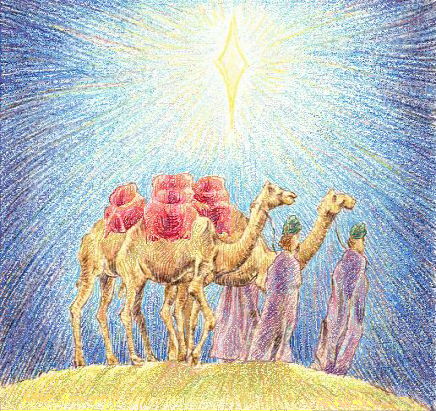
Wise men still seek Him!

He Humbled Himself

Why does Jesus say, "...for My Father is greater than I." (John 14:28)?

He Humbled Himself

He humbled Himself

Back to the Bible

Given that many modern Unitarian Universalists do not venture to describe themselves as Christians much less as Bible-believers, it might surprise readers to discover that modern Unitarianism began as a back-to-the-Bible movement:

  • "OF THE HOLY SCRIPTURES
    Question. I would fain learn of you what the Christian Religion is.

    Answer. The Christian Religion is the way of attaining eternal life, discovered by God.

    Q. But where is it discovered?

    A. In the holy Scriptures, especially that of the new Covenant."
  • (Racovian Catechism).

"..the Christian religion is defined at the outset as a way of attaining...eternal life, divinely revealed in the Scriptures (especially the New Testament), which certain proofs show to be true, which are easy to understand, and which contain all things necessary for salvation. Throughout the book, therefore, the proof of its teaching is drawn from the Bible, and only in a few instances are orthodox doctrines opposed on the ground that they are unreasonable." (Our Unitarian Heritage, 'Faustus Socinus and the Full Development of Socinianism in Poland, 1579-1638,' Earl Morse Wilbur, p. 160).

Faustus Socinus' disciples ultimately quit the Bible high ground, not by choice; they were forced from it by the nature of the case. The Bible does not say about Jesus what they say:

The Eternal Son

". . . since he had necessarily a human nature, he could not be God, nor, indeed, have existed antecedently to his birth." (Racovian Catechism).

Eternal Son

The Son: Eternal God or Beginning in Time?

The Vineyard Without beginning of days
From Everlasting The Same Yesterday, Today and Forever
Behold, I come With the Father
Eternal Life Son of God
By Him all things were created In the Beginning
Thy throne Mind in Christ
Before me My Redeemer
First and Last Before Abraham was
Enduring Love Downward Mobility
Beginning Where He was before
Came down from Heaven In the Wilderness
Temple Vision The Firstborn
The Word Stands Forever From the Womb
At the Beginning of His way The Ending of the Sonship?

The Son in the Old Testament

"Obviously the Son did not actually exist before Bethlehem, else we should have no difficulty locating Him as being actually present in the Old Testament and the period it covered." (Chapter 4, Gordon Magee, Is Jesus in the Godhead or Is the Godhead in Jesus?). Where was 'the Son' in the Old Testament?  He's in there!  "Who has ascended into heaven, or descended?  Who has gathered the wind in His fists?  Who has bound the waters in a garment?  Who has established all the ends of the earth? What is His name, and what is His Son's name, if you know?" (Proverbs 30:4).

"'Look!' he answered, 'I see four men loose, walking in the midst of the fire; and they are not hurt, and the form of the fourth is like the Son of God.'" (Daniel 3:25).

Here are some of the exploits of the Son of God, as reported in the Old Testament:

The Logos
Theophanic Angel
Wisdom

The First and the Last

Christians sing, "Glory be to the Father and to the Son and to the Holy Ghost, as it was in the beginning is now and ever shall be, world without end. Amen."  The God of the Bible does not change: "For I am the LORD, I do not change; Therefore you are not consumed, O sons of Jacob." (Malachi 3:6).  The God we meet on the first page of the Bible is the same as the God we meet on the last page: He is Father, Son and Holy Spirit:

The First PageThe Last Page

What is the Doctrine of the Trinity?:

Bible Proof:

Only One GodThe Father is GodThe Son is GodThe Holy Spirit is God


The Nescience of the Son

Anti-trinitarians demand an explanation for Mark 13:32:

"But of that day and hour no one knows, not even the angels in heaven, nor the Son, but only the Father."

Omniscience is one of the essential attributes of Deity.  If Jesus Christ is God incarnate, as Christians confess, then He must be omniscient.  He is elsewhere so stated to be: "Now we are sure that You know all things, and have no need that anyone should question You.  By this we believe that You came forth from God." (John 16:30).  How, then, could there be a circumstance of which He is ignorant?  Some thoughts on this very difficult issue:

"As the Word or Mind of God become flesh Jesus Christ was the incarnate wisdom of God, but incarnate in such a way as really to share with us our human ignorance, so that we might share in his divine wisdom.  That was not just an appearance of ignorance on his part, any more than his incarnating of the Word or Mind of God was only in appearance...Unless the Son of God had assumed the whole nature of man, including his ignorance, man could not have been saved.  The wonderful exchange that lies at the heart of the interaction of incarnation and atonement operates right here, as at every other point in the relation between God and sinful human being, for the human mind is an absolutely essential element in creaturely being. Hence God in Christ Jesus took it up into himself along with the whole man, in order to penetrate into it and deal with the sin, alienation, misunderstanding, and darkness that had become entrenched within it.  Jesus Christ came among us sharing to the full the poverty of our ignorance, without ceasing to embody in himself all the riches of the wisdom of God, in order that we might be redeemed from our ignorance through sharing in his wisdom...Thus throughout his earthly life Christ laid hold of our alienated and darkened human mind in order to heal and enlighten it in himself. In and through him our ignorant minds are brought into such a relation to God that they may be filled with divine light and truth. The redemption of man's ignorance has an essential place in the atoning exchange, for everything that we actually are in our lost and benighted condition has been taken up by Christ into himself in order that he might bring it under the saving, renewing, sanctifying, and enlightening power of his own reality as the incarnate wisdom and light of God." (The Trinitarian Faith, T. F. Torrance, pp. 187-188).

Satan tempted Jesus to use His divine powers to overcome the inconveniences and weaknesses of the humanity He had assumed, thus ensuring a pleasant and painless incarnation.  To hunger is an affliction of flesh, but God can turn even stones to bread, raining down manna on His children in the wilderness: "And when He had fasted forty days and forty nights, afterward He was hungry.  Now when the tempter came to Him, he said, 'If You are the Son of God, command that these stones become bread.'" (Matthew 4:2-3).  So did He do it?  No; He did not become incarnate to evade our ills and burdens, zooming by suffering humanity in an air-conditioned limousine, but to take them upon Himself: "Surely He has borne our griefs and carried our sorrows; Yet we esteemed Him stricken, Smitten by God, and afflicted." (Isaiah 53:4).

The Bible: God's Word?

Jesus was of the opinion that the Holy Spirit spoke through prophets like David: "Then Jesus answered and said, while He taught in the temple, 'How is it that the scribes say that the Christ is the Son of David? For David himself said by the Holy Spirit: "The LORD said to my Lord, Sit at My right hand,Till I make Your enemies Your footstool."'" (Mark 12:35-36).  He quotes Exodus as "spoken to you by God": "But concerning the resurrection of the dead, have you not read what was spoken to you by God, saying, 'I am the God of Abraham, the God of Isaac, and the God of Jacob'?" (Matthew 22:31-32).

Eager-beavers step forward, ready to 'correct' the odd notions found in scripture, like that Jesus Christ is God. Some of the Talmudists had a similar 'attitude': "When the sages refused to accept Rabbi Eliezer's view, he called upon the forces of nature to prove his theory correct, crying: 'Let the carob tree be uprooted from its place, let the water change the direction of its flow.' To this Rabbi Joshua replied: 'You cannot cite evidence from the carob.' Then Rabbi Eliezer appealed to Heaven to prove that his ruling should be accepted, and a divine voice was heard saying: 'What do you want of my son, Eliezer, whose rulings are universally accepted.' Still Rabbi Joshua was firm in his opinion, saying: 'Torah is no longer in Heaven. God has given it to men, and it is they who will decide this matter.' Most of the scholars then ruled against Rabbi Eliezer." (The Essential Talmud, Adin Steinsaltz, p. 218).

That's an attitude, but it's wrong: "LAMED. For ever, O LORD, thy word is settled in heaven." (Psalm 119:89). Why not allow God to offer His input into the discussion?  If He wanted to author a book, who could stop Him?

Authenticity of the Gospel Record: Ancient testimony

Early testimony is available respecting the reliability of the gospel record: "We have learned from none others the plan of our salvation, than from those through whom the Gospel has come down to us, which they did at one time proclaim in public, and, at a later period, by the will of God, handed down to us in the Scriptures, to be the ground and pillar of our faith...For, after our Lord rose from the dead, [the apostles] were invested with power from on high when the Holy Spirit came down [upon them], were filled from all [His gifts], and had perfect knowledge: they departed to the ends of the earth, preaching the glad tidings of the good things [sent] from God to us, and proclaiming the peace of heaven to men, who indeed do all equally and individually possess the Gospel of God. Matthew also issued a written Gospel among the Hebrews in their own dialect, while Peter and Paul were preaching at Rome, and laying the foundations of the Church. After their departure, Mark, the disciple and interpreter of Peter, did also hand down to us in writing what had been preached by Peter. Luke also, the companion of Paul, recorded in a book the Gospel preached by him. Afterwards, John, the disciple of the Lord, who also had leaned upon His breast, did himself publish a Gospel during his residence at Ephesus in Asia." (Irenaeus, Against Heresies, Book 3, Chapter 1.1)

Mark's gospel has the authority of Peter to back it up: "'Mark, having become Peter's interpreter, wrote down accurately everything he remembered, though not in order, of the things either said or done by Christ.'" (Fragments of Papias, The Apostolic Fathers, Second Edition, J. B. Lightfoot and J. R. Harmer, p. 316). John Mark turns up in Acts, along with his mother: "And when he had considered the thing, he came to the house of Mary the mother of John, whose surname was Mark; where many were gathered together praying.  And as Peter knocked at the door of the gate, a damsel came to hearken, named Rhoda." (Acts 12:12-13). His gospel reports the odd incident of a young man who drops his drawers in his haste to escape: "And there followed him a certain young man, having a linen cloth cast about his naked body; and the young men laid hold on him: And he left the linen cloth, and fled from them naked." (Mark 14:51-52). Is this comedic relief, or a 'signature'? - was that young man Mark himself?

Luke turns up in Acts, when the voice of the narrator shifts to 'we'.  He makes no claim to have witnessed anything prior to that, but knows those who did: "Forasmuch as many have taken in hand to set forth in order a declaration of those things which are most surely believed among us, Even as they delivered them unto us, which from the beginning were eyewitnesses, and ministers of the word; It seemed good to me also, having had perfect understanding of all things from the very first, to write unto thee in order, most excellent Theophilus, That thou mightest know the certainty of those things, wherein thou hast been instructed." (Luke 1:1-4).

Modern scholars scoff at the idea that any of the gospels originated amongst people who had any first-hand knowledge of Jesus, or even knew anyone who had. Their rule of thumb seems to be that anyone who wrote about Jesus must not have known Jesus.  But well-placed observers who lived in that time report it quite differently: "So Matthew composed the oracles in the Hebrew language and each person interpreted them as best he could." (Fragments of Papias, from Eusebius, quoted in The Apostolic Fathers, J. B. Lightfoot and J. R. Harmer, p. 316.)

Justin Martyr likewise, in the mid-second century, described the gospels as the "memoirs" of the apostles and their followers: "For in the memoirs which I say were drawn up by His apostles and those who followed them, [it is recorded] that His sweat fell down like drops of blood while He was praying and saying, 'If it be possible, let this cup pass'..." (Justin Martyr, Dialogue with Trypho, Chapter CIII.)

To outweigh Irenaeus', Papias', and Justin's early testimony, where is the countervailing contemporary testimony?

"I have seen God face to face"

The church sings, "Holy, Holy, Holy, Lord God Almighty, God in three persons, blessed Trinity!" Is this language Biblical?

Prosopon

Is Person a Biblical Word?

The First Time Boethius
What does it Mean? Face to Face
The Father and the Son The Holy Spirit
Express Image To Each His Own
Men and Angels Persona
Thrice Holy Who are the 'God-people'?
Separate or Distinct? Bible Terminology
Individuals God-beings

Three-in-One

One proof of God's triunity -- His 'Three-in-One'ness -- are the many instances where scripture ascribes one divine work indifferently to Father, Son and Holy Spirit.  The principle: "With regard to the divine nature, on the other hand, it is otherwise.  We do not learn that the Father does something on his own, in which the Son does not co-operate.  Or again, that the Son acts on his own without the Spirit.  Rather does every operation which extends from God to creation and is designated according to our differing conceptions of it have its origin in the Father, proceed through the Son, and reach its completion by the Holy Spirit." (Gregory of Nyssa, On Not Three Gods):

Three in One
Who Raised Jesus from the Dead? Who Authored Holy Writ?
Who Alone is Holy? Who Sanctifies Believers?
Who Gives Eternal Life? Who Supplies Pastors?

Humble, Meek and Mild

The Bible teaches that Jesus Christ is humble: "Take My yoke upon you and learn from Me, for I am gentle and lowly in heart, and you will find rest for your souls." (Matthew 11:29).

"Rejoice greatly, O daughter of Zion!
Shout, O daughter of Jerusalem!
Behold, your King is coming to you;
He is just and having salvation,
Lowly and riding on a donkey,
A colt, the foal of a donkey." (Zechariah 9:9, Matthew 21:5).

But hear the words of Jesus: "He who loves father or mother more than Me is not worthy of Me. And he who loves son or daughter more than Me is not worthy of Me." (Matthew 10:37).

"Is He, if He be not God, really humble? Is that reiterated self-assertion, to the accents of which we have been listening...consistent with any known form of creaturely humility? Can Jesus thus bid us believe in Him, love Him, obey Him, live by Him, live for Him; can He thus claim to be the universal Teacher and the universal Judge, the Way, the Truth, the Life of humanity---if He be indeed only man? (H.P. Liddon, Lecture IV, The Divinity of Our Lord and Savior Jesus Christ, The Witness of His Consciousness, Was He Really Humble?)

Is God the 'Father-only'?

Is God the Father-only?

  • "Q. Shew how it is also repugnant to the Scripture that Christ should have a divine Nature.

    A. First, because the Scripture proposeth to us but one God by nature, whom we formerly demonstrated to be the Father of Christ."
  • (Racovian Catechism).


 [ IE users, bookmark this page ]
Holy, Holy, HolyTrue and Living GodAnswering IslamThe Philo Library